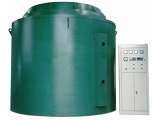
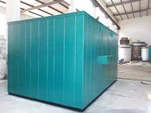
The creation and deployment of trolley-type annealing furnaces plays an important role in the advancement of mankind. In China, a relatively perfect copper smelting furnace appeared in the Shang Dynasty. The furnace temperature reached 1200 °C and the inner diameter of the furnace reached 0.8 m. During the Spring and Autumn Period and the Warring States Period, people further grasped the skill of advancing the furnace temperature on the basis of the melting furnace, and then produced cast iron.
In 1794, a straight cylindrical cupola of molten iron appeared in the world. Later, in 1864, the Frenchman Martin used the British Siemens regenerative furnace principle to create the first steel-making flat furnace heated with gaseous fuel. He uses a regenerator to preheat the air and gas at a high temperature, and then guarantees temperatures above 1600 °C for steelmaking. Around 1900, the power supply was gradually satisfied, and various resistance furnaces, electric arc furnaces, and core induction furnaces were used.
In the 1950s, coreless induction furnaces were rapidly deployed. Later, an electron beam furnace was used, which used an electron beam to impact solid fuel, which enhanced the appearance of heating and melting high melting point data. The furnace used for casting heating is the first hand forging furnace. The working space is a concave groove. The tank is filled with coal. The combustion air is supplied from the lower part of the tank, and the workpiece is buried in the coal for heating. The furnace has low thermal efficiency, poor heating quality, and can only heat small workpieces. Later, it is a semi-enclosed or fully enclosed furnace chamber furnace made of refractory bricks. It can be used as fuel for coal, gas or oil. Electric can also be used as a heat source, and the workpiece is heated in the furnace.
In order to facilitate the heating of large workpieces, a trolley type furnace suitable for heating steel ingots and large billets has appeared, and a pit furnace has appeared in order to heat the elongated rods. After the 1920s, various mechanized and active furnace types that could advance the furnace yield and improve working conditions appeared.
The fuel of the trolley-type annealing furnace is also followed by the development of fuel resources and the advancement of fuel conversion skills. The use of solid fuels such as lump coal, coke and coal powder is gradually converted to producer gas, city gas, natural gas, diesel oil, fuel oil, etc. Gas and liquid fuels, and various combustion equipment compatible with the fuel used have been developed.
The structure, heating skills, temperature control and furnace atmosphere of the trolley-type annealing furnace will directly affect the quality of the processed products. In the casting furnace, the heating temperature of the advancing metal can reduce the deformation resistance, but if the temperature is too high, it will cause grain growth, oxidation or over-burning, which will seriously affect the quality of the workpiece. In the heat treatment process, if the steel is heated to a certain point above the critical temperature and then suddenly cooled, the hardness and strength of the steel can be advanced; if it is heated to a certain point below the critical temperature and then slowly cooled, the hardness of the steel can be made again. Decline and advance resilience.