

Annealing Furnace
What is Annealing Furnace
Annealing furnace is a process used in semiconductor device fabrication which consist of heating multiple semiconductor wafers in order to affect their electrical properties. Heat treatments are designed for different effects. Wafers can be heated in order to activate dopants, change film to film or film to wafer substrate interfaces, densify deposited films, change states of grown films, repair damage from implants, move dopants or drive dopants from one film into another or from a film into the wafer substrate. During ion implantation process, the crystal substrate is damaged due to bombardment with high energy ions. The damage caused can be repaired by subjecting the crystal to high temperature. This process is called annealing. Annealing furnace may be integrated into other furnace processing steps, such as oxidations, or may be processed on their own.
Improved quality of finished products
One of the most significant benefits of using annealing furnaces for heat treatment processes is the improved quality of finished products. Annealing helps to eliminate internal stresses within the material, resulting in better dimensional stability and reduced distortion. This can be especially important for materials that are prone to warping or cracking during the manufacturing process. Additionally, annealing can improve the strength, hardness, and ductility of materials, making them more durable and better able to withstand wear and tear.
More efficient heat treatment process
Another benefit of using annealing furnaces is that they are more efficient than other types of heat treatment processes. Annealing furnaces are designed to operate at high temperatures for extended periods, which can save time and reduce energy costs. Additionally, because annealing involves heating materials to a specific temperature and holding them there for a set amount of time, the process is highly repeatable, resulting in consistent product quality.
Cost savings
Annealing furnaces also offer cost savings over other types of heat treatment processes. Because annealing is a controlled process that requires less energy and material than other methods, it can be more cost-effective in the long run. Additionally, annealing can help to reduce waste by improving product quality and reducing the need for rework.
Improve workplace safety
The use of annealing furnaces can also improve workplace safety. Because annealing furnaces are designed to operate at high temperatures, they are equipped with advanced safety features, such as automated controls and interlocks, to prevent accidents and injuries. Additionally, because annealing is a controlled process, it can help to reduce the risk of material failure, which can be dangerous in some applications.
-
 Vacuum Annealing FurnaceVacuum Annealing Furnace is applied for annealing and aging treatment of a variety of alloyAdd to Inquiry
 -
 Trolley Heat Treatment FurnaceThe valve cast steel annealing furnace is a national standard energy-saving periodic annealingAdd to Inquiry
 -
 Annealing Furnace SolutionThe functional principle is mainly to heat the heating wire, to make the temperature distributionAdd to Inquiry
 -
 Continuous Annealing FurnaceThis furnace is a combination of bell type annealing furnace and well type annealing furnace. ItAdd to Inquiry
 -
 Industrial Annealing Furnace For FastenerThe heat treatment furnace is suitable for smooth annealing of miniature bearings, precisionAdd to Inquiry
 -
 Pit Type Spheroidizing Annealing FurnaceThe strong convection pit type spheroidizing annealing Furnace is a large-scale annealing furnaceAdd to Inquiry
 -
 Annealed Furnace For Steel WireThe annealed furnace for steel wire is suitable for bright annealing of ferrous and non-ferrousAdd to Inquiry
 -
 Efficient Spheroidizing Annealing FurnaceThis high efficiency electric furnace can be used for spheroidizing, annealing and softeningAdd to Inquiry
 -
 Natural Gas Annealing Furnace For WireThe natural gas annealing furnace generally adopts a large trolley type annealing furnace. TheAdd to Inquiry
 -
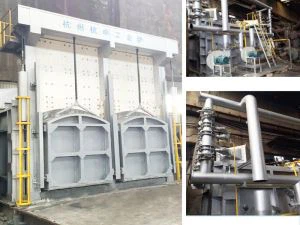 Annealing Furnace For Cold ExtrusionThe annealing furnace for cold extrusion that can preheat the air or gas by using a regenerator orAdd to Inquiry
 -
 Annealing Furnace For Standard PartsThe annealing furnace for standard parts is a national standard energy-saving periodic annealingAdd to Inquiry
 -
 Box Type Heat Treatment FurnaceThis series of Industrial Box Furnace is a cycle-operated electric furnace. Mainly used forAdd to Inquiry


- John
- Email: John@hzfurnaces.com
- Tel: 0086-571-86172088
- Mob: +8615990123123
- Grace zhou
- Email: jsaolkfurnace@126.com
- Mob: 086-15168107212
086-13777000921 - Add: Yanshan Industrial Zone, Chongxian Street, Yuhang, Hangzhou, Zhengjiang
Our Factory
Hangzhou Hangshen Energy-Saving Furnace Co.,Ltd. Is the production of energy-saving electric resistance furnace and of the professional manufacturers of industrial furnaces, the first fastener industry association member units, zhejiang province, the company was founded in 1990, organized by super resistance to industrial company, hangzhou enterprise, in 1996 changed its name to hangzhou HangShen energy-saving furnaces co., LTD.
Our Products
Company to provide clients with all kinds of heat treatment equipment, products include such as air, oil, electric heating carrier of pit type furnace, standard parts industry vacuum annealing furnace, trolley furnace, box-type furnace, push rod furnace, roller furnace, liquid ammonia decomposition furnace, steel wire of the bearing industry article spheroidizing annealing furnace, furnace, total fiber split bell type furnace, gas incinerator, cylinder, fuel heating furnace, quenching furnace, tempering furnace, phosphating, blast furnace and so on more than 30 varieties of more than hundreds kinds of products.
Rich Experience
Company according to the current developments in the field of industrial application potential and develop suitable for drawing, small and medium enterprises, large plate round wire annealing strong convective spheroidizing annealing furnace (combination and production technology in Japan, Europe, Taiwan), and invited Taiwan industrial furnace manufacturing engineers to guide the work, the no.1 stable performance, the comprehensive indexes conform to the requirements, production is ranked the forefront, by the customer the consistent high praise.
Certifications
The industrial furnaces produced by Hangzhou Hangshen Energy-Saving Furnace Co.,Ltd. have obtained a number of domestic certifications and are in line with the quality management system standards. Hangshen industrial furnace is the best choice for you to purchase Chinese industrial furnace.

An annealing furnace works by heating the material above the recrystallization temperature, it is made more ductile and therefore ready to be worked once more. Basically Annealing Furnaces and ovens used to change a material's strength and hardness, relieve internal stresses, and provide increased ductility.
Annealing improves the machinability and mechanical or electrical properties of the treated material. Hot rolled steel is also shaped and formed by heating it above the recrystallization temperature. While steel and alloy steel annealing is common, other metals can also benefit from the process, such as aluminium, brass, and copper.
Annealing is commonly used to relieve internal stresses that may lead to failure in service and to produce a more uniform, homogeneous, internal structure. Annealing is a heat treatment that alters the physical and sometimes chemical properties of a material to increase its ductility and reduce its hardness, making it more workable. It involves heating a material above its recrystallization temperature, maintaining a suitable temperature for an appropriate amount of time and then cooling.
Furnace types vary depending on the operation size, the desired temperature, and the features your product requires. It can have a direct or indirect firing system, a continuous or indexing furnace, and operate in batches or a constant heat treating manner.
Roller Hearth Furnaces
Roller Hearth Furnaces are adaptable and have an efficient design for indexing workload baskets. Their temperature can reach 2500℉. Additionally, they can be arranged in an oscillating configuration for lengthy heating cycles on extremely long stock, such as pipe, tubing, strip, and slabs. If enough floor space is available, a rolling hearth furnace can heat, soak, and cool a product continuously for stress reduction.
Pusher Furnaces
A pusher furnace processes small and large products in trays and baskets. This furnace type can reach 300℉ to 2,100ºF. It has pulse combustion, one of the most efficient ways to burn gas, and a smooth-running control system.
Box Furnaces
Box furnaces are batch-operating furnaces that heat up to 2500℉. The product is placed directly into the furnace using front loading or forklift equipment in this furnace type. It has single or multiple door systems that can be lifted vertically or horizontally.
Pot/Pit Furnaces
Pit furnaces are used for heating treatment requiring temperatures as high as 2000℉. Compared to other heat-treating furnaces, they perform the most thermal processes. Aside from annealing, they are also applicable for tempering, aluminum-solution, nitriding, steam treating, hardening, carburizing, and vacuum heat-treating.
Conveyor Belt Furnaces
Conveyor belt furnaces heat to 2100℉ and have a tunnel-shaped heating chamber divided into heating modules that integrate various heating processes into one continuous procedure. This furnace is effective and economical due to its extended life and low monitoring needs.
Integral-Quench Furnaces
The integral quench furnaces’ batch heating system reaches up to 1850℉. They have unobstructed work chambers and high-capacity recirculation fans. Integral-quench furnaces allow you to strategically place heated sources to enable rapid heat transmission, low energy consumption, and suitable temperature and carbon homogeneity.
How to Choose a Annealing Furnace
Annealing furnace is a device for heat treatment in a environment, widely used in the processing and manufacturing of various metal materials. Its working principle is to heat the workpiece to high temperature under vacuum, then keep it warm for a period of time, and finally slowly cool it to room temperature to improve material properties, eliminate internal stress, improve workpiece size accuracy, and surface quality.
Annealing furnace has the characteristics of fast heating speed, good quality, energy conservation, and environmental protection. Compared with traditional heat treatment equipment, annealing furnaces have higher heating speed and better temperature uniformity, which can reduce oxidation and decarburization of workpieces, improve surface quality and service life of workpieces. In addition, annealing furnaces can reduce energy consumption and environmental pollution, and have higher energy efficiency and environmental performance.
Clear requirements
Firstly, it is necessary to clarify one's own needs, including the type, quantity, temperature, and time of metal to be processed. This will help you choose the device model and configuration that suits your needs.
Understanding brands and manufacturers
Before purchasing, understand which brands of annealing furnaces are available in the market, as well as their reputation and word-of-mouth. At the same time, it is necessary to understand the production capacity and after-sales service of the manufacturer to ensure the purchase of equipment with reliable quality and complete service.
Test equipment performance
Before purchasing, it is necessary to personally visit the manufacturer or distributor to test the performance of the equipment, including its structure, heating method, degree, cooling system, etc. At the same time, it is important to understand the operation and maintenance requirements of the equipment to ensure that you can use and maintain it correctly.
Consider price and cost-effectiveness
When purchasing, consider the price and cost-effectiveness of the equipment, and do not blindly pursue low or high prices. Choose the appropriate equipment model and configuration based on your own needs and budget.
Temperature range
Determine the annealing temperature range you need. Different materials and processes may require different annealing temperatures, so when choosing equipment, it is important to ensure that it meets your temperature requirements.
Requirements
Consider the requirements of your process. Some processes require extremely low vacuum levels to effectively anneal, so it is necessary to choose equipment with sufficiently high levels.
Heating method
Annealing furnaces usually use methods such as resistance heating, electron beam heating, or induction heating. Consider selecting the appropriate heating method based on your process requirements and budget.
Temperature control system
Ensure that the equipment is equipped with advanced temperature control system, which can achieve precise temperature control and stable heating process, to ensure consistency in annealing effect.
Furnace chamber size
Select the appropriate furnace chamber size based on your workpiece size and production requirements. Ensure that the furnace chamber size can accommodate your workpiece and meet the needs of mass production.
Security and ease of use
Consider the safety of the device and the convenience of operation. The equipment should have comprehensive safety protection measures, and the operating interface should be easy to operate, making it convenient for users to operate and monitor.
There are also some other factors that need to be considered, such as the energy consumption of the equipment, the degree of mechatronics integration, and the impact on the environment. When making specific choices, it is necessary to comprehensively consider the above factors and make decisions based on one's actual situation.
Thermal Insulation Material and Structure Design of Annealing Furnace


The types of annealing furnaces are divided into trolley-type annealing furnaces, pit-type annealing furnaces, box-type annealing furnaces and bell- type annealing furnaces, which are all very common annealing furnaces. The annealing furnace is an energy-saving periodic operation furnace with a super energy-saving structure, using ceramic fiber and aluminum silicate flber as the thermal insulation structure, which can save more than 60% of energy.
The structure of trolley-type annealing furnace, pit-type annealing furnace and bell-type annealing furnace is relatively similar, so the same ceramic flber and aluminum silicate flber can be used as the thermal insulation structure. Since the temperature of the annealing furnace is below 1200 degrees, it is recommended to combine ceramic flber modules and ceramic fber blankets with high-temperature-resistant metal anchors to make the wall lining insulation layer of annealing furnace.
The box-type annealing furnace is also called annealing line. The furnace is small but very long. According to the temperature, it is composed of preheating zone, high temperature zone, heat preservation zone and cooling zone.
Due to the low temperature at both ends, standard ceramic flber modules and ceramic fber blankets can be selected for the thermal insulation at preheating zone and cooling zone. And it is better to use high-purity ceramic fber modules and ceramic fber blankets for the thermal insulation at the high temperature zone and the heat preservation zone.
The annealing furnace is mainly used for hypereutectoid carbon steel and alloy tool steel (such as the steel used in the manufacture of cutting tools, measuring tools, and molds). Its main purpose is to reduce hardness, improve machinability, and prepare for subsequent quenching. This technology is conducive to plastic working and cutting, and also improves mechanical toughness. Especially for steel grades such as bearing steel and tool steel, if spheroidizing annealing is performed before quenching, the following effects can be achieved:
(1) Bearing steel: The quenching effect is uniform; reduce quenching deformation; improve quenching hardness; improve cutting performance of workpiece; improve bearing performance such as wear resistance and corrosion resistance.
(2) Tool steel: The quenching effect is uniform; the phenomenon of quenching cracking and quenching bending is suppressed; the wear resistance, the sharpness of the blade and the service life are improved.
(3) General spheroidizing annealing: Heat the steel to between Ac1 and Ac3, and after sufficient heat preservation, slowly cool to 500℃ to 600℃for cooling. General purpose of spheroidizing annealing: used for pre-heat treatment of bearing parts, tools, cold molds, etc .
How to Perform Annealing Using Annealing Furnace
Most lab furnaces used for heat treatment can perform a specific function. This functionality simplifies the process since you'll only need to set the heating and cooling temperatures before leaving the object inside. However, this will only work efficiently if you know the proper temperatures for the substances you're annealing.
When using an annealing furnace, it's usually best to talk to your metal supplier to note the recommended temperatures, the methods you can use, and potential complications when working with different steel alloys.
For example, alloys need annealing temperatures anywhere from 300°C to 410°C. And depending on the type of alloy you're using, heating times can also range from half an hour up to three hours long. You'll also need to consider the size of the material and its cooling rates.
The annealing process follows three steps: recovery, recrystallization, and grain growth.
Recovery Stage
In the recovery stage, heat treatment equipment raises the temperature of a material. They also heat the substance and recover its physical properties, which include thermal expansion, internal energy, and electrical conductivity.
This step aims to soften the metal into a workable state and relieve its internal stresses, which can cause cracks and other mechanical complications.
Recrystallization Stage
The second stage focuses on maintaining the temperature of the material above its recrystallization point but below melting temperature. This step usually applies to cold-worked metal to help gain nucleation and cause new grains to form without any pre-existing tension.
Recrystallization also helps remove the effects of heavy plastic deformation on highly shaped, cold-form metal parts.
Grain Growth Stage
After the recrystallization stage, the material cools at a specific rate to cause new grains to develop while the recrystallized grains grow in size. The cooling rate is important because it controls the growth of the grains.
Completing these three steps will give the material more flexibility and less hardness. Occasionally, a subsequent process may be necessary to change the material's mechanical properties.
FAQ
Hangzhou Hangshen Energy-Saving Furnace Co.,Ltd is one of the top level China annealing furnace manufacturers and suppliers, and we are also a professional company with productive factory. Welcome to buy cheap or wholesale annealing furnace products from us.
Phosphating Furnace, Electric heating spheroidizing annealing furnace, Cover Style Bright Annealing Furnace