

Heating Furnace
What is Heating Furnace
A heating furnace is an industrial furnace that can control the temperature of heated materials, such as iron, based on heat treatment conditions such as heating conditions, holding temperature, and cooling conditions.By processing metals in a heating furnace according to the necessary heat treatment conditions, necessary properties such as hardness and toughness can be achieved.Heating furnaces have two main functions: heating and cooling. The heating function is composed of the heating method and atmosphere gas, while the cooling function is composed of the cooling method and cooling material.
Energy efficiency
Heating furnace are much more efficient combustion furnaces. This is because electric heating furnaces do not generate combustion products, which avoids the energy losses that occur in combustion furnaces due to the output of hot gases. In addition, electric heating furnaces can control the temperature more precisely, which allows for greater energy savings.
Temperature accuracy
Electric heating furnaces offer greater accuracy in temperature control. This is because electric heating elements can be controlled more precisely than combustion burners, allowing for greater temperature accuracy in industrial processes.
Flexibility
Electric heating furnaces offer greater flexibility in terms of operation and design this is because electric furnaces can be adapted to different production processes and designs, allowing for greater flexibility in the planning and organization of industrial production.
Reduced emissions
Electric heating furnace do not emit polluting gases, which reduces the environmental impact of industrial processes. This allows companies to comply with environmental regulations, improve their reputation in the marketplace and reduce costs associated with waste management and pollutant emissions.
-
 High Temperature FurnacesHigh temperature furnaces are another type of laboratory furnace that unlike typical furnaces isAdd to Inquiry
 -
 Regenerative furnacesUses: the regenerative heating furnace are suitable for large-scale casting and forging workpieces,Add to Inquiry
 -
 Gas Furnacegas furnace (trolley furnace) 1, equipment for various combustion gases as the medium, heating byAdd to Inquiry
 -
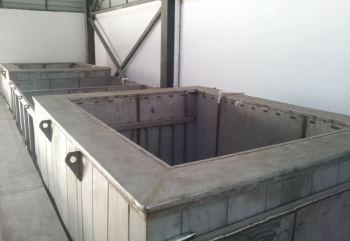 Electric Heat FurnaceCover with lid 1 furnace wood structure, its features are: good heat insulation,light weight,Add to Inquiry
 -
 Electric Phosphating And Saponification FurnaceTips: Pickling, phosphating, saponification, lime production line layout requirements: The drivingAdd to Inquiry
 -
 Phosphating And Saponification FurnaceTips: Pickling, phosphating, saponification, lime production line layout requirements: The drivingAdd to Inquiry
 -
High Temperature FurnacesThe Heat Treating Furnace used for heat treatment of all kinds of forging blanks and castings, theAdd to Inquiry
-
 Big Car Bottom Heat Treatment FurnaceGas car bottom furnace (trolley furnace) 1, equipment for various combustion gases as the medium,Add to Inquiry
 -
Heat Treating FurnacesGas car bottom furnace (trolley furnace) 1, equipment for various combustion gases as the medium,Add to Inquiry
-
 Large Car Bottom Heat Treatment FurnaceGas car bottom furnace (trolley furnace) 1, equipment for various combustion gases as the medium,Add to Inquiry
 -
 Big Car Bottom FurnaceGas car bottom furnace (trolley furnace) 1, equipment for various combustion gases as the medium,Add to Inquiry
 -
 Large Car Bottom FurnaceGas car bottom furnace (trolley furnace) 1, equipment for various combustion gases as the medium,Add to Inquiry


- John
- Email: John@hzfurnaces.com
- Tel: 0086-571-86172088
- Mob: +8615990123123
- Grace zhou
- Email: jsaolkfurnace@126.com
- Mob: 086-15168107212
086-13777000921 - Add: Yanshan Industrial Zone, Chongxian Street, Yuhang, Hangzhou, Zhengjiang
Our Factory
Hangzhou Hangshen Energy-Saving Furnace Co.,Ltd. Is the production of energy-saving electric resistance furnace and of the professional manufacturers of industrial furnaces, the first fastener industry association member units, zhejiang province, the company was founded in 1990, organized by super resistance to industrial company, hangzhou enterprise, in 1996 changed its name to hangzhou HangShen energy-saving furnaces co., LTD.
Our Products
Company to provide clients with all kinds of heat treatment equipment, products include such as air, oil, electric heating carrier of pit type furnace, standard parts industry vacuum annealing furnace, trolley furnace, box-type furnace, push rod furnace, roller furnace, liquid ammonia decomposition furnace, steel wire of the bearing industry article spheroidizing annealing furnace, furnace, total fiber split bell type furnace, gas incinerator, cylinder, fuel heating furnace, quenching furnace, tempering furnace, phosphating, blast furnace and so on more than 30 varieties of more than hundreds kinds of products.
Rich Experience
Company according to the current developments in the field of industrial application potential and develop suitable for drawing, small and medium enterprises, large plate round wire annealing strong convective spheroidizing annealing furnace (combination and production technology in Japan, Europe, Taiwan), and invited Taiwan industrial furnace manufacturing engineers to guide the work, the no.1 stable performance, the comprehensive indexes conform to the requirements, production is ranked the forefront, by the customer the consistent high praise.
Certifications
The industrial furnaces produced by Hangzhou Hangshen Energy-Saving Furnace Co.,Ltd. have obtained a number of domestic certifications and are in line with the quality management system standards. Hangshen industrial furnace is the best choice for you to purchase Chinese industrial furnace.
There are many kinds of heating furnaces. Here is an example of which refractory insulation materials are needed for the cracking furnace lining.
The cracking furnace lining has higher requirements on refractory insulation materials, and needs to have the characteristics of good airtight performance and low thermal conductivity. Therefore, the furnace wall of the cracking furnace of the large ethylene cracking device adopts lightweight brick structure in the burner airflow scouring area, and other parts. A refractory fiber and fiber module structure with good thermal insulation properties are used.
The refractory insulation materials used are also different due to the different operating conditions of the various parts. The materials applied in the cracking furnace lining can be roughly divided into thermal insulation board, heat preservation refractory brick, refractory brick, ceramic fiber felt, ceramic fiber module, thermal insulation castable, ceramic plate and the like. When the cracking furnace lining is constructed, it can be divided into four parts: Radiation chamber, transition section, convection section, flue and chimney according to its structure. The specific configuration of refractory insulation materials for each part is as follows:
The radiation room
The radiation chamber is a light hydrocarbon heating reaction part of the cracking medium, the furnace temperature is 1260℃, and oil and gas burners are arranged on both sides of the wall and the bottom. The refractory insulation materials used in the bottom of the radiant chamber, the side wall/end wall, and the top of the furnace are different.
1) The bottom of the furnace mainly uses thermal insulation boards, thermal insulation refractory bricks, refractory bricks, etc.
2) The side wall/end wall is made of ceramic fiber felt, insulation board, refractory insulation brick, fiber module, hook, hook fixing plate and fiber module anchoring nail.
3) The top of the furnace is mainly made of ceramic fiber felt, fiber module and fiber module anchoring nail.
Transition section
The side and end walls are all installed with the radiation chamber wall of the fiber module, and the special-shaped module is installed with the specially designed module; the bottom lining structure is the same as the radiant section bottom. The materials that need to be used are ceramic fiber felts, insulation boards, refractory insulation bricks, fiber modules, and fiber module anchoring nails.
Convection section
The side wall panel is prefabricated refractory castable on the ground with a thickness of 200mm; the 100mm thick insulation board is used as the backing, the end tube lining has been completed, and the elbow box lining structure is 50mm thick (2 layers 25mm) fiber blanket. The materials used for the side walls are ceramic fiberboard, castables, "y" anchors, and "v" anchors. Anchors and ceramic fiber mats are required for the elbow box.
Flue, chimney
Chimney and flue: The lining structure is a 50mm thick refractory castable. Anchors and insulation castables are required.
Resistance heating
Resistance heaters such as metal heaters, silicon carbide (SiC), molybdenum, tungsten, and carbon are commonly used.
Temperature control is achieved by inserting a thermocouple into the heater and managing the heater temperature, thereby controlling the temperature inside the furnace.
Induction heating
This is the most widely used method of electric heating.
A high-frequency magnetic field is created by an external coil, inducing an electric current in the object to be heated, and heating the surface of the object. It is an efficient method.
Electron beam heating
This is a heating method that irradiates an electron beam onto the object to be heated to partially generate high temperature.
Laser beam heating
Similar to electron beam heating, this method irradiates the object to be heated with a laser beam to partially generate high temperature.
Direct current heating
This is a heating method in which electric current is passed directly through the object to be heated, generating self-heating, and is also known as “Joule heating”.
What Are the Methods for Inspecting Heating Furnace Products
Destructive testing
This involves breaking the test piece under specified conditions and measuring its strength.
01
Hardness testing
This involves pressing a punch onto the test piece and measuring the indentation shape to determine the hardness.
02
Microstructure analysis
This involves collecting test pieces from the heat-treated product, polishing and etching them, and observing the microstructure using a microscope.
03
Measurement and visual inspection
This involves measuring the dimensions and deformation of the heat-treated product and inspecting for surface defects.
04
Non-destructive testing
This involves using X-rays, ultrasonic waves, or other methods to inspect the internal cracks or inclusions in the heat-treated product.
05
Components of Heating Furnace
Heating source equipment
In heating furnaces, heaters are mainly used for electric types, and burners are used for combustion heating types.
Energy sources such as electricity, gas (city gas, propane, LNG), heavy oil, and kerosene are used to increase the ambient temperature inside the furnace.
The required output of the heat source device is calculated based on the heat generated by the object being heated, the heat radiated from the surface of the equipment, the heat lost when opening and closing the door, and the required heating speed.
Designing with too much capacity increases the cost, while designing with insufficient capacity can lead to production stoppages when output drops due to unexpected issues.
Heating chamber
We heat the chamber and raise it to a certain temperature to thermally process the object to be heated.
To prevent temperature irregularities within the chamber, the air is circulated with fans.
If the fans fail for any reason, all products being heated will become defective, resulting in significant losses.
Installing a rotation sensor is thus one way to immediately identify issues. A particular substance known as insulation material is used to insulate the surrounding space since heat loss from the heating chamber raises fuel and energy expenditures. Refractory bricks, which were frequently utilized in the past, have given way to lighter insulation materials with superior insulation capabilities.
When choosing insulation materials, cost-effectiveness and equipment safety must be taken into account because some insulation materials with superior performance can be more expensive.
Atmosphere gas
An atmospheric gas is the gas used to replace the air in a heating furnace for a specific purpose.
Inert gases:Nitrogen and argon
Prevent reactions with heated materials.
Oxidizing gases:Oxygen and water vapor
Create oxide layers on the surface of steel materials by inducing decarburization reactions.
Reducing gases:Hydrogen, ammonia, and decomposition gases
Used for bright heat treatment to prevent high-temperature oxidation and maintain a shiny surface of steel materials.
Carbonizing gases:Carbon monoxide, Hydrocarbon gas, Natural gas, Propane gas, and Methanol
Used for carburizing treatment on the surface of steel materials.
Cooling equipment
Heating furnaces often incorporate cooling functions, and there are various types of cooling agents such as water, oil, and air.
The transportation method for the cooling device depends on the processing capacity. For high-capacity processing, a continuous method is used where the products are automatically transported from the heating furnace using a conveyor belt, and then sent into the cooling device where they are cooled by a cooling medium.
Applications of Heating Furnace
Manufacturers extensively employ heating furnace in metal casting and smelting operations. They provide the necessary heat to melt metal alloys, allowing for the creation of intricate castings and the extraction of pure metals from ores.
Heat treatment processes like annealing, tempering, and quenching rely on heating furnace. These processes enhance the mechanical properties of metals, making them stronger, more durable, or more malleable as required.
It are crucial in glass manufacturing processes. By heating a mixture of raw materials, such as sand, soda ash, and limestone, in specific proportions, the furnaces facilitate the melting and shaping of glass into various forms.
Heating furnace fire clay and other raw materials in ceramic production at high temperatures. This process transforms them into durable ceramic materials used in various applications, from pottery to advanced ceramics.
It’s play a vital role in various chemical processes, including the production of chemicals, petroleum refining, and pharmaceutical manufacturing. These furnaces provide heat for chemical reactions, separation processes, and catalyst regeneration.
Classification of Heating Furnaces
Furnace classification by heat source
Heat is generated in furnaces to raise their temperature to a level somewhat above the temperature needed for the process, either by (i) combustion of a fuel or by (ii) conversion of electric energy to heat.Fuel-fired (combustion type) furnaces are most widely used, but electrically heated furnaces are used where they offer advantages which cannot be always measured in terms of fuel cost.
In fuel fired furnaces, the nature of the fuel may make a difference in the furnace design, but that is not much of a problem with modern industrial heating furnaces and burners, except if solid fuels are involved. Similar bases for classification are air furnaces, oxygen furnaces, and atmosphere furnaces. Related bases for classification might be the position in the furnace where combustion begins, and the means for directing the products of combustion, e.g., internal fan furnaces, high velocity furnaces, and baffled furnaces.
Electric furnaces for industrial process heating may use resistance or induction heating. Theoretically, if there is no gas or air exhaust, electric heating has no flue gas loss, but it is to be recognized that the higher cost of electricity as a fuel is the result of the flue gas loss from the boiler furnace at the power plant which generates the electricity.
Resistance heating normally involves the highest electricity costs, and can need circulating fans to assure the temperature uniformity usually achievable by the flow motion of the products of combustion in a fuel-fired furnace. Silicon (Si) control rectifiers have made input modulation more economical with resistance heating. Various materials are used for electric furnace resistors. The common material which is used is Ni-Cr alloy, in the form of rolled strip or wire, or of cast zigzag grids (mostly for convection). Other resistor materials are molten glass, granular carbon, solid carbon, graphite, or silicon carbide. It is occasionally possible to use the load that is being heated as a resistor.
In induction heating, a current passes through a coil that surrounds the piece to be heated. The electric current frequency to be used depends on the mass of the piece being heated. The induction coils are generally water cooled to protect them from overheating themselves. Although induction heating ordinarily uses less electricity than resistance heating, some of the gain is lost due to the cost of the cooling water and the heat that it carries with it. Induction heating can be easily adapted to heating only the localized areas of each piece and to mass-production methods. However these day, modern production techniques with rapid impingement heating using gas flames have been very successfully employed in hardening of gear teeth, heating of flat springs for vehicles, and a few other high production applications.
More recent developments in processing by new methods of electric or electronic industrial heating include use of plasma arcs, lasers, radio frequency, microwave, and electromagnetic heating, and combinations of these with fuel firing.
Heating furnace classification by the purpose and the material is heated
In this classification industrial heating furnaces are identified for the purpose for which they are being used. Examples are soaking pits and reheating furnaces for the heating of ingots, blooms or billets in the rolling mills, forging furnaces for the heating of whole pieces or ends of bars for forging or welding. Slot forge furnaces have a horizontal slot instead of a door for inserting the many bars that are to be heated at one time. The slot also often serves as the flue.
Industrial heating furnaces also sometimes named for the material being heated. Examples are bolt heading furnaces, plate furnaces, wire furnaces, rivet furnaces, and sheet furnaces etc. Some furnaces also are classified by the process of which they are a part, such as hardening, tempering, annealing, melting, and polymerizing. In carburizing furnaces, the load to be case-hardened is packed in a carbon-rich powder and heated in pots/boxes, or heated in rotating drums in a carburizing atmosphere.
Furnace classification by the nature of the transfer of heat to the material
If the flames developed in the heating chamber are proper, or if the products of combustion are circulated over the surface of the material to be heated, the furnace is said to be direct-fired.
In most of the furnaces, ovens, and dryers, the loads are not to be harmed by contact with the products of combustion. Indirect-fired furnaces are used for heating materials and products for which the quality of the finished products can become inferior if they come in contact with flame or products of combustion. In such cases, the material to be heated can be either (i) heated in an enclosed muffle (conducting container) that is heated from the outside by products of combustion from burners or (ii) heated by radiant tubes that enclose the flame and product of combustion.
In case of a muffle furnace the muffle can be made of high temperature resistant alloy steel or ceramic. It is usually pumped full of an inert gas. Pot furnace or crucible furnace are a form of muffle furnace in which the container prevents product of combustion to come in contact with the load. In crucible or pot furnace, tangentially fired integral regenerator-burners save fuel, and their alternate firing from positions 180 deg apart provides even heating around the pot or crucible periphery.
In a double muffle arrangement, not only is the charge is enclosed in a muffle but the products of combustion are also confined inside muffles which are called radiant tubes. This use of radiant tubes to protect the inner cover from uneven heating is being replaced by direct-fired flat and high velocity flames to heat the inner cover, thereby improving thermal conversion efficiency and reducing heating time.
In case of radiant tube furnaces, for charges which need a special atmosphere for protection of the material to be heated from oxidation, decarburization, or for other purposes, modern indirect fired furnaces are built with a gas tight outer casing surrounding the refractory lining so that the whole furnace can be filled with a prepared atmosphere. Heat is supplied by fuel-fired radiant tubes or electric resistance elements.
FAQ
Hangzhou Hangshen Energy-Saving Furnace Co.,Ltd is one of the top level China heating furnace manufacturers and suppliers, and we are also a professional company with productive factory. Welcome to buy cheap or wholesale heating furnace products from us.
Heat Treating Furnace, Electric Heated Line of Phosphating and Saponification, Electric Phosphating And Saponification Furnace