Hangzhou Hangshen Energy-Saving Furnace Co.,Ltd.
Hangzhou Hangshen Energy-Saving Furnace Co.,Ltd. Is the production of energy-saving electric resistance furnace and of the professional manufacturers of industrial furnaces, the first fastener industry association member units, zhejiang province, the company was founded in 1990, organized by super resistance to industrial company, hangzhou enterprise, in 1996 changed its name to hangzhou HangShen energy-saving furnaces co., LTD. Since its inception the company has always adhere to science and technology and the deepening reform. Over the years through the company all staff´s continuous efforts and explore, proud achievements obtained. Is district environmental protection bureau rated industrial furnace drainage standard.
Our Factory
Hangzhou Hangshen Energy-Saving Furnace Co.,Ltd. Is the production of energy-saving electric resistance furnace and of the professional manufacturers of industrial furnaces, the first fastener industry association member units, zhejiang province, the company was founded in 1990, organized by super resistance to industrial company, hangzhou enterprise, in 1996 changed its name to hangzhou HangShen energy-saving furnaces co., LTD.
Our Products
Company to provide clients with all kinds of heat treatment equipment, products include such as air, oil, electric heating carrier of pit type furnace, standard parts industry vacuum annealing furnace, trolley furnace, box-type furnace, push rod furnace, roller furnace, liquid ammonia decomposition furnace, steel wire of the bearing industry article spheroidizing annealing furnace, furnace, total fiber split bell type furnace, gas incinerator, cylinder, fuel heating furnace, quenching furnace, tempering furnace, phosphating, blast furnace and so on more than 30 varieties of more than hundreds kinds of products.
Rich Experience
Company according to the current developments in the field of industrial application potential and develop suitable for drawing, small and medium enterprises, large plate round wire annealing strong convective spheroidizing annealing furnace (combination and production technology in Japan, Europe, Taiwan), and invited Taiwan industrial furnace manufacturing engineers to guide the work, the no.1 stable performance, the comprehensive indexes conform to the requirements, production is ranked the forefront, by the customer the consistent high praise.
Certifications
The industrial furnaces produced by Hangzhou Hangshen Energy-Saving Furnace Co.,Ltd. have obtained a number of domestic certifications and are in line with the quality management system standards. Hangshen industrial furnace is the best choice for you to purchase Chinese industrial furnace.
Related products

Electric Heated Line Of Phosphating And Saponification
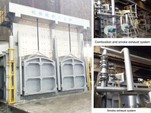
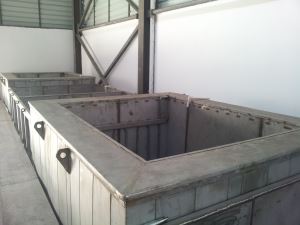
Cover with lid 1 furnace wood structure, its features are: good heat insulation,light weight, corrosion. 2 the furnace shell with No. 321, thickness 3mm welding.

Application and features: The heat treatment furnace using liquefied petroleum gas or diesel combustion mode, the high temperature flame spray directly to the cylinder surface, so as to achieve the purpose of burning, and burning cylinders 3KG and 5KG of different specifications.

Big Car Bottom Heat Treatment Furnace
The furnace body frame is composed of a variety of large and medium-sizedsteel spot welding, shell sealing plate is a color steel plate, Gao Lvquan fiber refractory rejection blanket module for lining, sealing and obvious energy saving effect.

Gas car bottom furnace (trolley furnace) equipment for various combustion gases as the medium, heating by all kinds ofburner combustion, the maximum temperature of 1200℃.

The electric heat furnace shell with No. 321, thickness 3mm welding.Gasket layer of electric heat furnace uses thermal furnace body acupuncture blanket insulation,heat preservation performance is good, the proportion of light.

The trolley drive with all wheels are driving wheels, reliable driving, driving system consists of "three in one" of motor and reducer installation method forshaft mounted, compact structure, firm assembly, flexible, simple operation, andconvenient repair.

Gas car bottom furnace (trolley furnace) equipment for various combustion gases as the medium, heating by all kinds ofburner combustion, the maximum temperature of 1200℃.
Big Car Bottom Heat Treatment Furnace
The furnace body frame is composed of a variety of large and medium-sizedsteel spot welding, shell sealing plate is a color steel plate, Gao Lvquan fiber refractory rejection blanket module for lining, sealing and obvious energy saving effect.

In the metallurgical industry, regenerative furnace is an equipment (industrial furnace) that heats materials or workpieces (generally metal) to the temperature of rolling into forging.
What is High Temperature Furnaces
High temperature furnaces are another type of laboratory furnace that unlike typical furnaces is capable of reaching higher temperatures between 1400℃ up to 1800℃. There are several types of high temp furnaces including tube furnaces and box furnaces. A high temp furnace typically consists of heating elements located on both sides of the heating chamber to ensure good thermal uniformity. Process applications for a high temperature furnace include sintering of high temperature materials, glass melting, high temperature testing of ceramics, fusion and firing processes, and powder metallurgy processes.
Advantages of High Temperature Furnaces
Uniform high temperatures
High temperature furnaces can maintain uniform temperatures over a wide range, typically from 800 to 3,000℃ (1,500 to 5,400 ℉). This uniformity is crucial for processes like brazing, sintering, and heat treatment, where temperature consistency is essential for the quality of the final product. The absence of air or other gases in the vacuum environment prevents heat transfer through convection, which can cause temperature variations.
Precise temperature control
The temperature within the heating zone of a high temperature furnaces can be controlled very precisely. This is facilitated by insulation or thermal barriers that surround the heating zone, ensuring that the heat generated is directed towards the material being processed. Precise control is necessary for achieving the desired metallurgical properties in the heated materials.
Quick quenching
High temperature furnaces are capable of quickly cooling or quenching the product after heat treatment. This rapid cooling is essential for certain metallurgical processes that require rapid solidification to achieve specific microstructures and properties. The ability to quench quickly is a direct result of the vacuum environment, which facilitates rapid heat extraction.
Versatility
High temperature furnaces can be customized and adjusted according to different process requirements, and are suitable for heating and processing of various materials, with high flexibility and versatility.
1. The refractory material of the new furnace contains moisture. In addition, in order to generate an oxide layer on the heating element, it must be baked at low temperature for several hours and gradually heated to 900℃ before use, and kept for more than 5 hours to prevent the furnace chamber After being damp, it ruptured due to a rapid temperature change.
2. When heating, the furnace jacket will also become hot. Keep the furnace away from combustible materials and keep the furnace easy to dissipate heat.
3. The working life of the heating element depends on the oxide layer on its surface. Destroying the oxide layer will shorten the life of the heating element, and every shutdown will damage the oxide layer. Therefore, it should be avoided after the machine is turned on.
4. The furnace temperature should not exceed the maximum temperature during use, so as not to burn the electric heating elements, and it is prohibited to pour various liquids and molten metals into the furnace.
5. When doing the ashing test, be sure to fully carbonize the sample on the electric furnace before putting it into the ashing furnace to prevent carbon accumulation from damaging the heating element.
6. After several cycles of heating, the insulating material of the furnace may appear cracks. These cracks are caused by thermal expansion and have no effect on the quality of the furnace.
7. High-temperature furnace The muffle furnace is an experimental product, and it must not be used for other purposes or pollute the furnace.
8. When using, always take care to prevent accidents caused by failure of automatic control. Do not use resistance furnaces when there is no one on duty at night.
9. After using the high-temperature furnace muffle furnace, the power supply should be cut off to allow it to cool down naturally. The furnace door should not be opened immediately to prevent the furnace chamber from being suddenly broken due to cold. If it is used urgently, open a small slit first to speed up its temperature drop. When the temperature drops below 200℃, the furnace door can be opened.
10. When using the muffle furnace, pay attention to safety and be careful not to burn.
11. When the muffle furnace/high-temperature furnace is used for a long time or after being out of service for a long time, the furnace must be baked.
12. The high temperature furnace box and controller must be placed on the flat floor or workbench in the room. The controller should avoid vibration, and its location should not be too close to the resistance furnace to prevent overheating and the electronic parts can not work normally.
13. Insert the thermocouple into the resistance furnace, and the gap must be filled with asbestos rope.
14. When the silicon carbide high-temperature resistance furnace is used at normal power, the temperature rises to about 800℃, and the power of the electric furnace can be appropriately increased (adjust the output knob of the controller). After reaching the required temperature, adjust it to the standard power. Time super power usage.
What Kind of High Temperature Furnace Is Safe and Reliable
The use of three layers of insulation, respectively: Aluminum silicate fiberboard, aluminum oxide fiberboard, aluminum oxide (polycrystalline) fiberboard, not only good insulation effect, and energy saving effect is more than 80% of the old electric furnace. And long-term use of furnace, shell temperature is less than 45 degrees, the temperature will not produce burns to the human body.
The closed-loop technology thyristor module is adopted for trigger control, and the phase-shifting trigger control mode is adopted. The output voltage, current or power can be continuously adjustable, with the characteristics of constant voltage, current or power; the current ring is the inner ring and the voltage ring is the outer ring. When the load is suddenly added or the load current exceeds the current limit value, limit the output current of the voltage regulator in the rated current range to ensure the normal operation of the output and voltage regulator; at the same time, the voltage loop is also involved in regulation, so that the output current of the voltage regulator is limited to the rated current range, and the output current and voltage are maintained constant under the premise of sufficient regulation allowance. So as to protect the heating element from the impact of excessive current and voltage and achieve safe and reliable control effect and control accuracy.
Integrated module control unit is adopted to ensure accurate control accuracy. Double loop control and double loop protection are designed, which are equipped with overshoot, overshoot, undershoot, segment couple, phase missing, overvoltage, overcurrent, overtemperature, current feedback, soft start and other protection.
Types of High Temperature Furnaces
Tube Furnaces: These furnaces feature a cylindrical design with a central heating zone, often used for processes that require a controlled atmosphere or vacuum. They are suitable for applications like material research, semiconductor processing, and chemical synthesis.
Box Furnaces: Box furnaces are chamber-style furnaces with a cubic or rectangular shape. They are versatile and can be used for a wide range of applications including heat treatment, ceramic firing, and metal annealing. Box furnaces are available in single or multiple zone configurations, offering flexibility in temperature control and uniformity.
Ultra-High Temperature Furnaces: These furnaces can operate at temperatures exceeding 1800℃, often used in advanced materials research and high-temperature testing. They are equipped with advanced heating elements and insulation to withstand extreme temperatures.
Vacuum Furnaces: Designed to operate under vacuum conditions, these furnaces are used for processes that require the exclusion of air or gases. They are essential for applications involving reactive materials or processes that could be affected by oxidation.
Muffle Furnaces: Muffle furnaces are characterized by a muffle system that isolates the heating elements from the chamber, ensuring that the combustion process does not come into contact with the material being heated. They are commonly used in analytical and laboratory settings for ashing samples and heat-treating small parts.
What Materials Are Used In High Temperature Furnace
Refractory metals are crucial in the construction of high-temperature furnaces due to their high melting points, wear resistance, and good corrosion resistance. Examples of these metals include Tantalum (Ta), Tungsten (W), Rhenium (Re), Molybdenum (Mo), and Niobium (Nb). These materials are dense, hard, and extraordinarily resistant to heat and wear, making them ideal for high-temperature applications. For instance, Tantalum is used in the form of foils and strips, which are essential components in high-temperature furnaces where extreme heat resistance is required.
Graphite is another primary material used in the hot zones of vacuum furnaces. It is favored for its durability and low cost, making it the most common material in industrial settings. Graphite hot zones are particularly suitable for furnaces where the primary concern is durability and cost-effectiveness. However, for applications requiring a very clean environment, refractory metal hot zones are preferred.
The heating elements in high-temperature furnaces are typically made from iron-chrome aluminum or nickel chrome alloys. These materials are chosen for their ability to efficiently convert electricity into heat and their suitability for withstanding high temperatures. The shapes of these elements can vary, including cylindrical, semi-circular, or flat panels, depending on the design and requirements of the furnace.
The furnace body, which is the main structure, is usually constructed from high-grade refractory materials to ensure stability and durability at high temperatures. The vacuum system is integral for creating a low-pressure environment, facilitating more complete physical and chemical reactions. The heating system, often electrically or gas-fired, is designed to rapidly raise the furnace temperature to the required levels, which can range from hundreds to thousands of degrees. The control system manages parameters such as temperature and vacuum levels, ensuring the accuracy and safety of the processes.
Products Description
When heating large objects, especially when the conductor performance is not good, please avoid blocking thermal couples and heating elements. Also make sure that there are no objects within 15 mm of the element.
The thermocouple is used to sense the temperature near the heating element, but if a large object is placed in a high-temperature furnace, it may record the average temperature of the object and the element, which will cause the heating element to overheat.
In this case, you can heat up the large object at a lower temperature, and then reset the controller to a value close to the highest temperature required.
Take care to avoid hitting the components when loading and unloading.
How Should We Calculate the Power of the High Temperature Furnace
One is the heat balance method. According to the law of conservation of energy, the total heat consumed by the resistance high-temperature furnace is equal to the total heat emitted by the electric heating element. The total heat consumed includes the effective heat of heating the metal and the heat loss of the high-temperature furnace. The heat is converted to total power, and the electric heating efficiency is taken into account, and then multiplied by the power reserve coefficient. This coefficient estimates that the productivity of high-temperature furnaces may increase and the heat loss may increase. The power reserve coefficient is for continuous high-temperature furnaces and for intermittent operations. The other type of high temperature furnace is the empirical method, which mainly determines the furnace power according to the furnace volume.
Before calculating the electric heating element, the material of the electric heating element and its connection method should be selected according to the determined power and power supply line voltage.
Refractory Materials: The choice of refractory materials is crucial for the construction of high temperature furnaces. Graphite and ceramics are particularly favored due to their high melting points and resistance to thermal shock. These materials not only maintain structural integrity under extreme heat but also perform well in vacuum environments, which are common in vacuum furnaces.
Heating Elements: The heating elements, often made from tungsten or molybdenum, are designed to reach and maintain high temperatures necessary for processes like sintering, diffusion bonding, and other high-temperature treatments. These metals are selected for their ability to resist oxidation and their high melting points, which allow them to function effectively without degrading at high temperatures.
Cooling Systems: After the high-temperature process is completed, rapid cooling is often required to set the materials or to prepare them for further processing. Cooling systems in high temperature furnaces are designed to cool the workpiece efficiently, preventing unwanted thermal gradients and stresses that could affect the quality of the final product.
High temperature furnaces are used across various industries, including metallurgy, ceramics, and nuclear fuel processing. They are essential in sintering processes for materials like stainless steel, refractory metals, and uranium oxide. In the ceramic industry, these furnaces are used for sintering, co-firing, and metallizing. Additionally, ultra-high temperature furnaces and high temperature tube furnaces are designed for even more extreme heating applications, reaching temperatures up to 3000 ℃, and are crucial in research and industrial processes requiring such high temperatures.
What Is the Difference Between a High-Temperature Furnace and a High-Temperature Oven
The temperature is different
The operating temperature of the high-temperature furnace is generally between 800-1800℃. The high temperature oven is generally between 100-600℃.
Different uses
The high temperature furnace is mainly used in laboratories, industrial and mining enterprises, and scientific research units for element analysis and determination, alloy steel products, various metal parts, such as normalizing, quenching, annealing and other heat treatment. It can also be used for sintering, dissolving, and high temperature of metals and ceramics. Furnace and high-temperature baking analysis, diamond cutting blades for high-temperature sintering and other high-temperature heating, can also be used for organic matter curing and sintering. It is an electric furnace for periodic operation. Divided into household ovens and industrial ovens. Household ovens can be used to process some pasta. Such as bread, pizza, can also be made into egg tarts, biscuits and other snacks. Some ovens can roast chicken. The prepared food is usually fragrant. Industrial oven is a kind of equipment used to dry products in industry. It has electricity and gas, also called oven, drying box, etc. The two functions are completely different.
FAQ
Hot Tags: high temperature furnaces, China, manufacturers, suppliers, factory, company, wholesale, buy, cheap, products, Copper Clad Steel Wire Annealing Furnace, Wire Bright Annealing Furnace, High Performance Industrial Annealing Furnace, Electric Heat Furnace, Dehydrogenation Furnaces, Hood Type Annealing Furnace